Journal · January 1, 2026 · updated July 13, 2026
The Federal EV Tax Credit Is Gone: Your Real Cost Per Mile
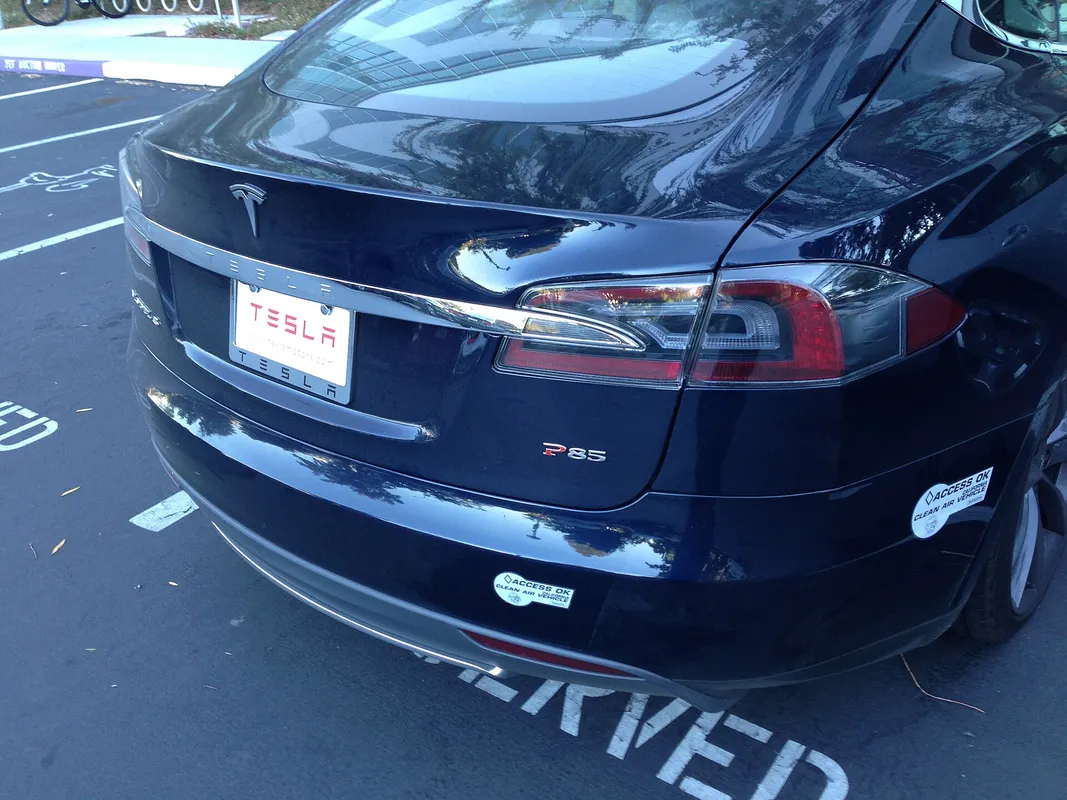
Some version of this question comes up constantly: "Isn't the federal tax credit dead? Doesn't that make a Tesla $7,500 more expensive?" The honest answer is more interesting than a flat yes or no — the credit is gone, but a different deduction replaced part of it, and it pays out in a completely different way. Here's the actual math, not just the headline.
What ended, and what replaced it
The $7,500 federal new-clean-vehicle credit ended September 30, 2025, under the One Big Beautiful Bill Act. There is no federal purchase credit on a Tesla bought in 2026 — full stop. What's still on the table if you finance: you can deduct up to $10,000 a year in auto-loan interest on a vehicle with US final assembly, for loans originated between 2025 and 2028. There's also the Section 30C home-charger credit — 30% of the cost, up to $1,000 — through June 30, 2026, which is unrelated to the vehicle credit but worth claiming if you're installing a home charger this year.
Why "which is worth more" is the wrong question
The old $7,500 credit was a one-time reduction against your tax liability the year you bought the car — non-refundable, but a known, fixed number. The loan-interest deduction is different in a way that matters: it's not a fixed dollar amount, it's a percentage of whatever interest you actually pay, spread across the life of the loan, and it only helps if your return benefits from it. A cash buyer gets nothing from it. A buyer with a small loan or a low rate gets far less than the $10,000 cap implies.
A worked example (illustrative — run your own numbers)
Say you finance $45,000 of a Model Y at 6.5% APR over 60 months. Averaged over the term, that's roughly $7,600 in total interest paid — under the $10,000 annual cap, so in a year with meaningful interest paid, it could be fully deductible. In the 22% federal bracket, that's roughly $1,670 in tax savings across the life of the loan — not in year one. Compare that to the old credit's $7,500 taken as a single lump the year you bought. Even in a generous case, the deduction doesn't come close to replacing the old credit's value for a financed buyer, and it's zero for a cash buyer.
Now put that against actual driving. At 12,000 miles a year over five years (60,000 miles), that illustrative $1,670 in tax savings works out to roughly 2.8 cents a mile — a real number, but a rounding error next to the referral's free FSD trial, worth $297 on delivery day with no financing required at all. Your rate, loan size and bracket will all move this number; treat it as a worked illustration, not your figure.
Where the referral code actually fits
The point worth being blunt about: the referral code and the loan-interest deduction solve two different problems, and neither substitutes for the other. The referral's 3-month FSD (Supervised) trial (≈ $297) is guaranteed the moment you take delivery on an eligible model — no tax filing, no interest paid, no bracket to qualify for. The loan-interest deduction is conditional, delayed to tax season, and only reaches meaningful value if you're financing a real balance. If you want a benefit you can count on regardless of how you pay, attach a referral before you order: steven787345 still gets you the trial on Model 3, Y or eligible Cybertruck.

What still stacks in 2026
Full picture, dated: the referral's FSD trial and the $400 solar discount stack with the auto-loan-interest deduction (the 30C charger credit, by contrast, ran only through June 30, 2026 and no longer applies) and the loan-interest deduction (through 2028) — plus whatever state, utility or manufacturer promotion is live when you order. None of these is the vehicle purchase credit; that one's gone. The full stacking map is kept current on what still stacks in 2026.
The bottom line
Don't budget on the loan-interest deduction the way you might have budgeted on the old $7,500 credit — they aren't equivalent, and the new one depends entirely on your own financing and bracket. What is fixed and guaranteed is the referral trial on an eligible model. Run your own interest and mileage numbers before you decide how much any of this actually moves your monthly cost. For the fine print on who actually qualifies for the deduction, see the fine print every Tesla buyer should check.
Sources: