Dispatch · · updated
The Auto-Loan Interest Deduction Gets Its Paperwork
Up to $10,000 a year in auto-loan interest is deductible — and starting with tax year 2026, your lender reports it on Form 1098-VLI while you report the VIN on Schedule 1-A.
I've already written up what the auto-loan-interest deduction is worth and its eligibility fine print. This dispatch is about something neither of those notes could cover yet, because it hadn't been finalized: the actual paperwork. Starting with tax year 2026, this deduction has real IRS mechanics attached to it, and that matters more than it sounds like it should.
The two numbers to know: Form 1098-VLI and Schedule 1-A
From tax year 2026 on, lenders report qualifying auto-loan interest to you on Form 1098-VLI, and you report the vehicle's VIN on Schedule 1-A when you file. Up to $10,000 a year of qualified interest is deductible, and it's recurring — not a one-time credit, but a deduction you can potentially claim every year you're paying interest on a qualifying loan. It replaces the purchase credit that ended September 30, 2025.
What "qualifying" actually requires
- The vehicle must be new, under 14,000 lb, for personal use, and bought after December 31, 2024 and before January 1, 2029.
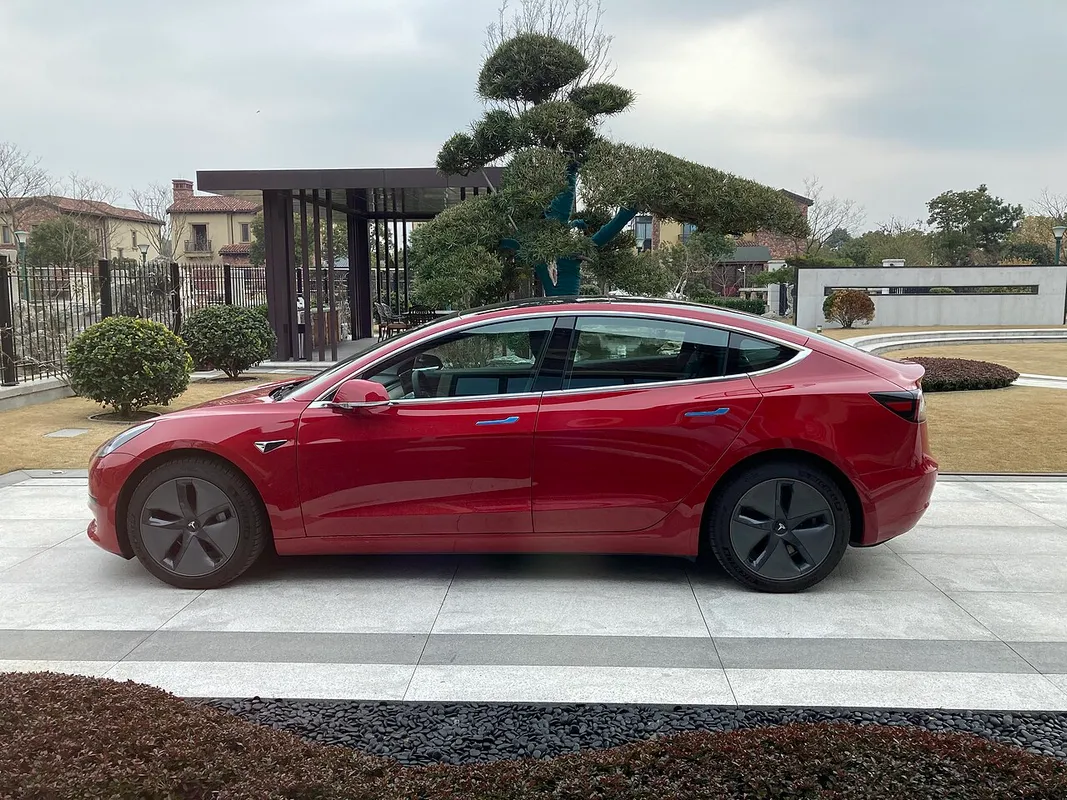
- It must be final-assembled in the US — VIN first digit 1, 4 or 5 generally means US assembly, and a Fremont-built Model 3 qualifies.
- Used vehicles and leases do not qualify, full stop.
The phase-out most people miss
The deduction starts phasing out at $100,000 MAGI for single filers and $200,000 for married filing jointly, shrinking 20% for every $10,000 of income above that threshold. It's also above-the-line, meaning you don't need to itemize to claim it — genuinely good news for the majority of filers who take the standard deduction. But the phase-out means a higher-earning household won't see the full benefit the headline "$10,000 deduction" implies, regardless of how much interest they actually paid.
Why the paperwork detail is the actual news here
This isn't a new deduction — I first wrote about it when the purchase credit ended. What's new is that it now has real IRS mechanics behind it: your lender is on the hook to send you a 1098-VLI, and your preparer (or your software) needs the VIN for Schedule 1-A. If you financed a qualifying Tesla in 2026, expect that form from your lender around January 2027 — and don't file without it.
What this doesn't touch
None of this affects your referral benefit. The FSD (Supervised) trial from a referral code activates at delivery regardless of how you financed the car, or what you claim at tax time. This is a running-cost, post-delivery filing matter — worth tracking accurately, but separate from the code you use to order.
This is a summary of publicly reported tax mechanics, not tax advice — confirm your own eligibility, VIN assembly plant, and MAGI phase-out with a preparer who can see your actual return.
Sources
Everything above is checked against these before publishing, and again whenever the note is updated.
- TurboTax — IRS rules for the OBBB car-loan interest deduction
- Clean Energy Credit Union — OBBBA EV tax deduction 2026 guide
- Tesla — Incentives
Independent field notes by Alex Marchetti. Not affiliated with, endorsed by, or operated by Tesla, Inc. If you order using the code in the site header or the bar at the bottom of the screen, a real Tesla owner may earn Tesla Credits — it costs you nothing and never changes your reward.