Journal · June 1, 2026 · updated July 13, 2026
60,000 Superchargers, a $12.99 Membership, and You
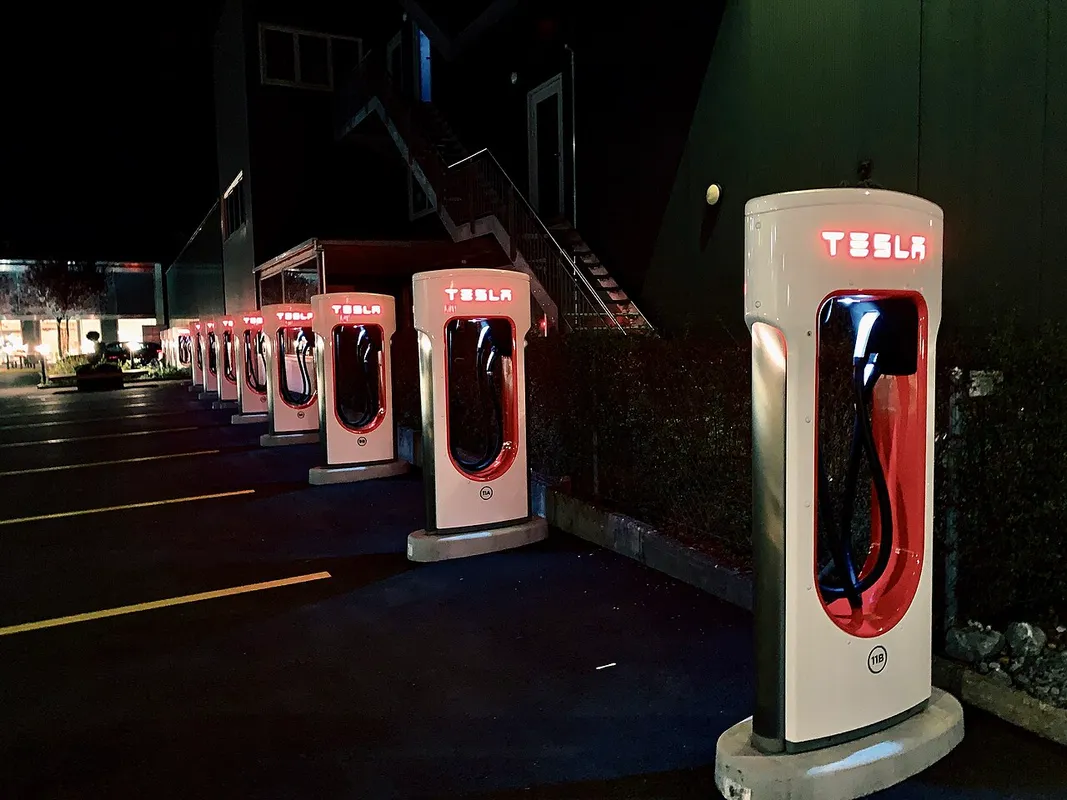
Two Supercharger-network numbers are circulating in owner discussions: the network has passed 60,000 stalls across North America, and Tesla's paid Charging Membership at $12.99 a month is now common enough that people are asking whether it's worth it. Neither of these is about the referral code directly — but the math connects in a way worth spelling out.
The numbers, as reported
Tesla's Supercharger network now counts more than 60,000 stalls across North America, and a Model Y (like every current Tesla) has full access to it. Separately, Tesla's paid Charging Membership runs $12.99 a month and lowers the per-kWh rate you pay at a Supercharger — according to the same tracking, it pays for itself once you're doing four or more Supercharging sessions a month.
Where the referral connects
Here's the connection that rarely gets written down: if you're an existing owner sharing your own referral code, the $250 Tesla Credit you earn from one successful referral covers roughly 19 months of that $12.99 membership — call it a year and a half, from a single friend using your code. If you Supercharge often enough that the membership already pays for itself, a referral credit effectively buys you well over a year of cheaper charging on top of that, at no cost to the person you referred.
Why this matters more with a bigger network
A 60,000-plus-stall network changes the calculation on whether the membership is worth it in the first place: the more often a Supercharger is genuinely your most convenient option (rather than a home charger), the more those four-plus monthly sessions add up, and the more a lower per-kWh rate is worth locking in. None of this is a reason to refer someone who doesn't actually want a Tesla — but if you're already sharing your code, it's a concrete way to think about what the $250 is worth to you specifically, rather than treating it as an abstract number.
For buyers reading this before they own one
If you're not yet a Tesla owner and are weighing charging costs as part of total cost of ownership, the short version: the referral code you use to order doesn't touch your ongoing charging rate — that's a separate account decision you make later, whether or not to join the paid membership. What the referral does get you at delivery is the 3-month FSD (Supervised) trial, unrelated to charging. Keep the two straight — "referral benefit" and "cheaper charging" get conflated constantly, and they are not the same programme.
How to actually share your own code
If you're already an owner and this has you thinking about referring people: your code lives in the Tesla app under Refer, capped at 10 referrals a year. The full mechanics — and what the 250 can be spent on — are in how to share your own code and earn $250.
A quick gut-check before you rely on any of this
Both numbers here are directional rather than exact for any one situation. "60,000-plus stalls" describes the network as a whole, not the density near you specifically — a Model Y with full Supercharger access still depends on where you actually drive. And the "four sessions a month" break-even on the membership assumes a fairly typical per-kWh rate; if you charge mostly at home and only Supercharge on road trips, the math tips the other way and the membership may not be worth it for you at all. Check your own charging habits over a real month before deciding — the same discipline that applies to loan terms before assuming a tax figure fits your situation.
Figures on network size and membership pricing are as reported by the source below; Supercharger pricing and network size change over time, so check current terms before relying on either number for a specific trip or budget.
Sources: